
“Albania Embroidered with Memory”
The “Albania Embroidered with Memory” project aimed to contribute to the preservation, promotion, and transmission of Albania’s intangible cultural heritage, with a particular focus on traditional costumes as an important component of national identity and the development of cultural tourism. Through the activities implemented, the project made this heritage more accessible to both domestic and international audiences by combining cultural documentation, technology, tourism promotion, and the active engagement of young people.
During the first phase, the “Albania Embroidered with Memory” digital album in English was developed, bringing together historical, ethnographic, and cultural information from different regions of Albania, with particular emphasis on traditional costumes and their distinctive features. Traditional garments were presented as living expressions of cultural identity, highlighting the symbolism and significance of their colours, materials, embroidery, forms, and accessories. The album was published on ASET Center’s official website and made accessible through a QR code, enabling interested audiences and visitors to easily access and explore its content.
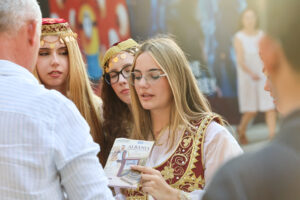
During the second phase, the album was promoted at key tourist locations across Tirana. Trained young people, dressed in representative Albanian traditional costumes and equipped with foreign-language skills, interacted directly with tourists, introduced them to elements of Albanian culture and ethnography, and distributed informational leaflets featuring the album and a QR code providing direct access to it. In parallel, a two-month promotional campaign was carried out both on-site and through social media, increasing the visibility of the project and raising awareness of Albania’s rich cultural heritage.
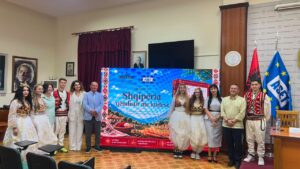
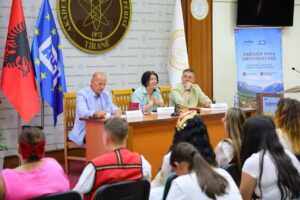
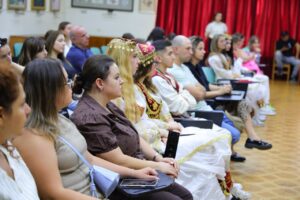
The project concluded with a cultural and educational event featuring the presentation of traditional costumes from different regions of Albania. The project was implemented in. Through the results achieved, it created a sustainable cultural resource, encouraged the active participation of young people, and contributed to the promotion of Albanian cultural identity and to strengthening Albania’s visibility as a cultural tourism destination with a rich and living heritage.